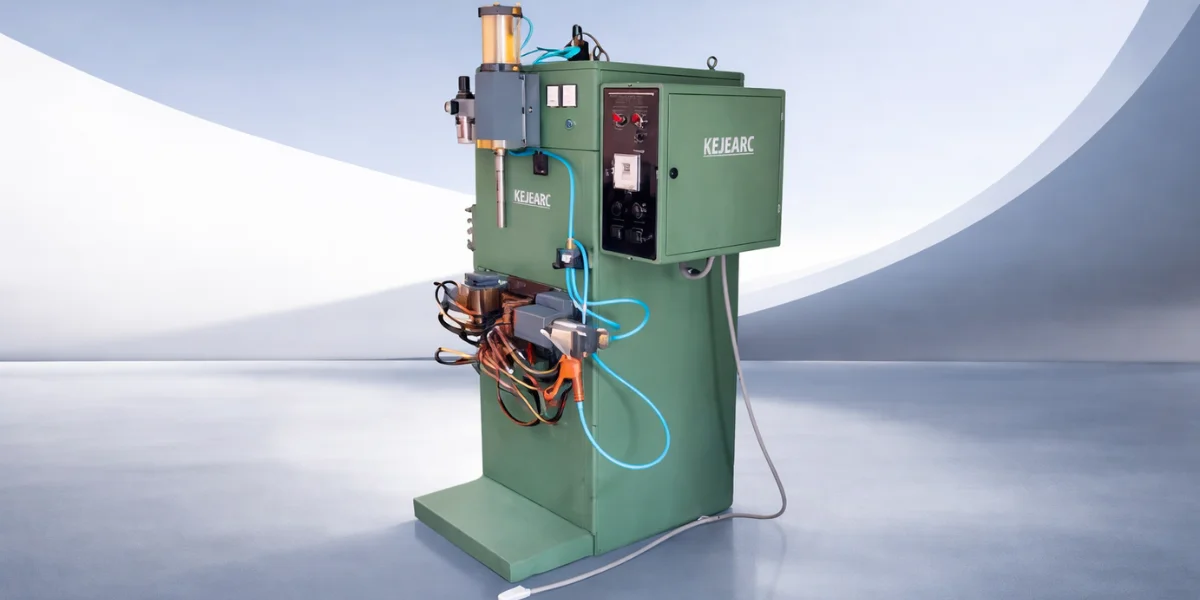
Resistance Brazing Machines

RANGE : 15 –250 kVA

Keje Electric Resistance Brazing Machines use the resistance heating principle to join metals by brazing. In this process, the workpieces are locally heated by the resistance generated when electric current passes through the electrodes and the components. The filler metal placed between the workpieces melts and forms a strong metallurgical bond.

This method provides localized heating, precise control, and energy-efficient operation, making it ideal for industrial brazing applications.

Keje Electric manufactures two types of resistance brazing equipment:

Stationary Type

Recommended for small components that can be easily handled and positioned during the brazing process.

Portable Type (Guns or Tongs)

Used for large or difficult-to-handle components where mobility and flexibility are required.

Key Features :

  • Adjustable Electrode Pressure : Allows accurate control of pressure during the brazing process for consistent joint quality.
  • Easy Current Adjustment : Simple current control enables quick setup for different materials and component sizes.
  • Electronic Brazing Timer : Provides precise control of brazing time to ensure consistent heating and joint quality.
  • Localized Heating : Heats only the required area, preventing damage to surrounding material.
  • Energy Efficient Operation : Consumes significantly less power compared to furnace-based brazing methods.

Applications :

Resistance brazing can be used for a wide range of metals and alloys, except materials with melting points below 400°C, such as lead or tin.

Typical applications include:

  • Tungsten silver tips on copper electrical contacts
  • Tungsten carbide tips brazing
  • Copper-to-copper joints
  • Electrical switchgear components
  • Copper-to-brass joints
  • Transformer lead terminals
  • Fuse links and electrical connectors
  • Cable connectors and clips

This process is widely used in electrical, automotive, tool manufacturing, and heavy engineering industries.

Keje Electric Resistance Brazing Machines solve these challenges by providing:

  • Precise localized resistance heating
  • Adjustable electrode pressure for accurate control
  • Electronic timers for repeatable brazing cycles
  • Energy-efficient operation
  • Faster production and reduced material wastage

Frequently Asked Question

Parameter Specification
Machine Type Pneumatic Spot Welder
Control System Electronic Timer / SCR Control
Electrode Pressure Adjustable
Cooling Water Cooled
Operation Pneumatic/Manual

Frequently Asked Question

What is resistance brazing?

Resistance brazing is a joining process where heat is generated by electrical resistance to melt filler metal between two components, creating a strong metallurgical bond.

Copper, brass, steel, tungsten carbide tips, and other high-temperature alloys can be brazed using this process.

Resistance brazing provides localized heating, lower power consumption, faster cycle times, and better process control.

Keje Electric Resistance Brazing Machines are available in a 15 kVA to 250 kVA range depending on the application.

Absolutely. Our robotic welding solutions can be tailored to suit the unique requirements of different projects and production lines.

Connect With Engineering Excellence